

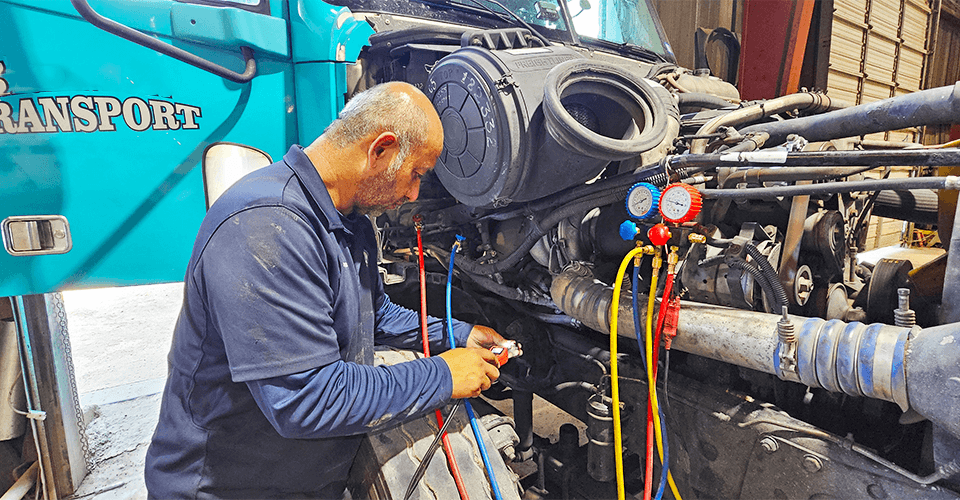
Why Semi-Truck AC Systems Stop Cooling in Dallas–Fort Worth
When a semi-truck air conditioning system stops cooling, the problem is usually deeper than low refrigerant. In heavy-duty trucks, AC failures often involve compressor wear, electrical faults, refrigerant leaks, or airflow restrictions in the condenser. In Dallas–Fort Worth, extreme summer temperatures expose these weaknesses quickly, making reliable AC diagnostics essential for driver safety and fleet uptime.
If your semi-truck AC system stops cooling, the most common causes are refrigerant leaks, compressor failure, condenser airflow problems, or electrical control faults. In hot regions like Dallas–Fort Worth, AC systems operate under extreme thermal load, so even minor issues can quickly lead to complete cooling failure and driver fatigue.
What Drivers Usually Notice
Most drivers first notice AC problems gradually rather than suddenly.
Typical symptoms include:
- AC blowing warm or slightly cool air
- Cooling that works only while driving
- Air temperature changing with engine RPM
- Weak airflow from vents
- AC clutch cycling on and off rapidly
- Cabin becoming extremely hot in traffic
Many owner-operators initially assume the system just needs refrigerant. In reality, refrigerant loss usually indicates a leak or system imbalance.
What the Symptom Actually Means Mechanically
A semi-truck AC system is a closed pressurized refrigeration system.
When cooling performance drops, one or more mechanical components are usually failing.
Common mechanical causes include:
Refrigerant leaks
Small leaks in hoses, fittings, or the evaporator slowly reduce cooling capacity.
Compressor wear or failure
The compressor is responsible for circulating refrigerant. Internal wear reduces system pressure and cooling output.
Condenser airflow restriction
Road debris, bugs, or damaged condenser fins prevent proper heat dissipation.
Expansion valve problems
If refrigerant flow is restricted, the evaporator cannot absorb enough heat from the cab.
Electrical control faults
Modern trucks rely on pressure sensors, relays, and control modules to regulate AC operation.
When these components fall out of balance, the AC system cannot maintain proper pressure and temperature levels.
What Happens If You Keep Driving
Ignoring AC problems may seem harmless compared to engine failures, but the operational consequences can escalate quickly.
Possible outcomes include:
- Driver fatigue due to extreme cab temperatures
- Reduced concentration during long hauls
- Increased dehydration risk
- AC compressor seizure
- Refrigerant contamination spreading through the system
If a compressor fails internally, metal debris can circulate through the AC system and contaminate multiple components.
At that point repairs often require replacing the compressor, condenser, expansion valve, and flushing the system.
Why This Problem Escalates Faster in Dallas–Fort Worth
Texas heat places exceptional stress on heavy-duty truck AC systems.
Summer temperatures in Dallas frequently exceed 100°F, while engine compartments generate even higher heat loads.
This environment creates several challenges:
- Higher condenser temperatures
- Increased refrigerant pressure
- Longer compressor duty cycles
- Reduced cooling efficiency in traffic
Fleet trucks operating in urban freight routes around Dallas, Irving, Arlington, and Fort Worth often experience AC failures sooner than trucks running cooler northern routes.
When You Should Stop Driving Immediately
Certain AC symptoms indicate serious system failure.
Drivers should stop operating the AC system if they notice:
- Loud grinding from the compressor
- Burning smell when AC engages
- AC belt slipping or smoking
- Refrigerant oil leaking around hoses
- Compressor clutch locked or seized
Continuing to run the system in these conditions can destroy multiple components and dramatically increase repair costs.
What a Proper Diagnostic Should Include
Professional AC diagnostics for heavy-duty trucks involve more than simply adding refrigerant.
A proper diagnostic process includes:
Pressure testing
Evaluating high-side and low-side refrigerant pressures.
Leak detection
Using UV dye or electronic leak detection equipment.
Compressor performance testing
Verifying compressor output and clutch engagement.
Condenser airflow inspection
Checking cooling fan operation and condenser blockage.
Electrical system testing
Inspecting sensors, relays, and control circuits.
Accurate diagnostics prevent repeated refrigerant refills and identify the true cause of AC failure.
Fleet Perspective
For fleet operators, driver comfort directly affects safety and productivity.
When AC systems fail during summer operations:
- Driver fatigue increases
- Dispatch schedules are disrupted
- Productivity drops
- Maintenance costs rise if issues spread through the system
Preventive diagnostics and early repairs reduce downtime and protect driver performance during high-temperature operations.
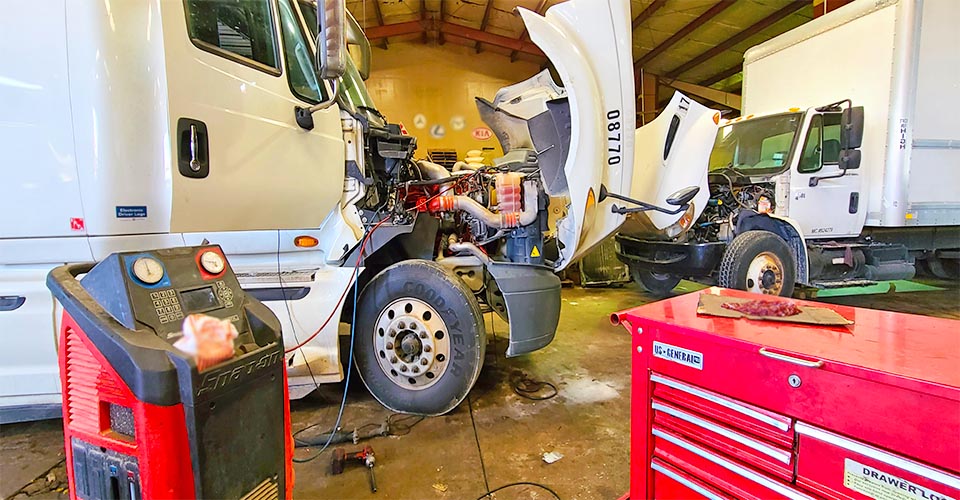
Semi-Truck AC System Repair FAQs
Warm air usually indicates refrigerant loss, compressor failure, or condenser airflow restriction.
Yes. Low refrigerant reduces lubrication inside the compressor and can cause internal failure.
Airflow across the condenser is reduced in traffic, preventing proper heat dissipation.
Most professional diagnostics take between 30 and 60 minutes depending on system complexity.
Only temporarily. If refrigerant is low, there is usually a leak that must be repaired.
Semi-Truck AC Not Cooling in Dallas?
Get a Professional Diagnostic Today
If your semi-truck AC system is no longer cooling properly, early diagnostics can prevent major system failure.
Salazar Semi-Truck Repair Inc. provides heavy-duty AC system diagnostics and repair for owner-operators and fleet trucks operating throughout Dallas–Fort Worth.