

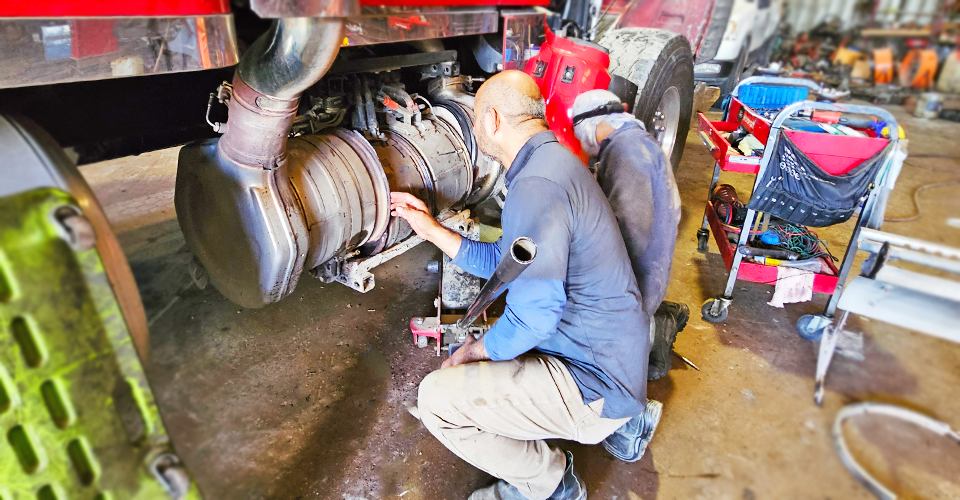
Truck Keeps Entering Regen? Get Semi-Truck DPF Cleaning in Dallas, TX
If your semi-truck keeps entering regen, losing power, or going into derate, the problem may be a restricted DPF. At Salazar Semi-Truck Repair Inc., we provide semi-truck DPF cleaning in Dallas, TX with diagnostics designed to identify soot buildup, aftertreatment restriction, and the root cause behind repeat regeneration problems.
We work with owner-operators, fleet managers, dispatchers, and commercial truck drivers across Dallas-Fort Worth who need more than a temporary reset. Our goal is to identify why the DPF is loading up, inspect the aftertreatment system correctly, and help you reduce repeat downtime.
What Causes a Semi-Truck to Enter Regen Too Often?
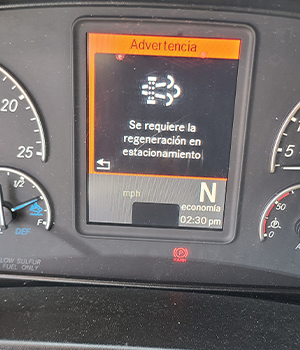
When a semi-truck starts going into regen too often, that usually means the aftertreatment system is under stress. In many cases, the DPF is collecting too much soot, the sensors are reporting inaccurate values, or the truck is not completing regeneration cycles correctly. That is when drivers begin noticing warning lights, reduced pulling power, weak throttle response, or engine derate.
A forced regen may help in some situations, but when the same problem keeps coming back, the issue often goes deeper. A restricted DPF can increase exhaust backpressure, reduce performance under load, and create a pattern of recurring downtime that affects revenue and delivery schedules.
What Causes DPF Problems in Semi-Trucks?
DPF problems rarely happen for one simple reason. Most of the time, they develop because of soot accumulation, interrupted regeneration cycles, sensor failures, or unresolved engine conditions that keep creating excess particulate matter. Cleaning the filter without identifying the cause can temporarily improve performance, but it often leads to the same codes and the same derate problem returning later.
- Excessive soot accumulation inside the DPF
- Frequent stop-and-go operation that interrupts normal regeneration
- Failed differential pressure sensor
- Faulty exhaust temperature sensors
- Repeated incomplete regen cycles
- Underlying engine or fuel system issues creating excess soot
Common Signs Your Semi-Truck DPF Needs Cleaning
A truck usually gives warning signs before the DPF restriction becomes severe. Catching those signs early can help you avoid a more expensive repair or a roadside shutdown.
- Frequent regen cycles
- Engine derate
- Loss of power while driving
- Check engine light related to aftertreatment
- Reduced fuel efficiency
- Exhaust restriction warnings
- Poor performance under load
Semi-Truck DPF Problems and Solutions
| Truck Symptom | Possible Cause | Recommended Next Step |
|---|---|---|
| Frequent regen cycles | DPF restriction or soot overload | DPF diagnostics and cleaning evaluation |
| Engine derate | High exhaust backpressure | Inspect DPF condition and aftertreatment system |
| Loss of power under load | Restricted exhaust flow | Test DPF, sensors, and related emissions components |
| DPF warning light | Clogged filter or failed sensors | Run aftertreatment diagnostics |
| Repeated aftertreatment faults | Root-cause problem not yet corrected | Diagnostic inspection before another forced regen |
Why DPF Problems Are Common in Dallas-Fort Worth
Trucks operating in Dallas-Fort Worth deal with traffic, idle time, repeated low-speed driving, short local runs, and stop-and-go conditions that can make DPF problems worse. Routes through I-35, I-20, I-45, Loop 12, and I-635 often create the exact operating pattern that interrupts complete regeneration cycles and increases soot loading inside the filter.
For owner-operators and fleets moving through Dallas logistics corridors, this means a truck can begin showing frequent regen, aftertreatment faults, or loss of power even when the issue was not obvious a few days earlier.
We Commonly Diagnose DPF Issues on These Semi-Trucks
We commonly inspect DPF and regen-related problems on major heavy-duty truck platforms used across Dallas-Fort Worth.
- Freightliner Cascadia
- Peterbilt 579
- Kenworth T680
- Volvo VNL
- International LT
- Other diesel commercial trucks with aftertreatment systems
How Our DPF Cleaning Process Works
Our DPF cleaning process starts by identifying what the truck is actually doing, not just reading one active fault code. We inspect the system, review the complaint, evaluate restriction data, and determine whether the filter can be cleaned or whether another issue must be corrected first.
- Inspect the truck symptoms and warning indicators
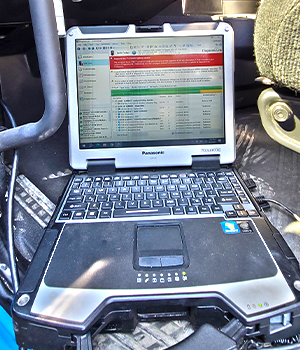
- Run diagnostics on the DPF and aftertreatment system
- Check sensor accuracy and exhaust restriction data
- Determine whether cleaning is appropriate or if repair is needed first
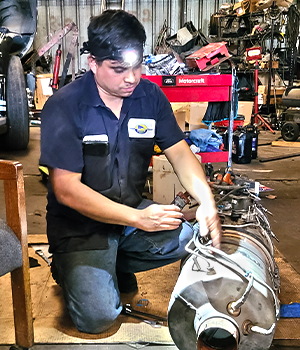
- Clean the DPF when the filter is serviceable
- Verify performance and look for causes of repeat failure
Why Proper DPF Diagnostics Matter Before Cleaning
Not every regen problem means the filter only needs cleaning. In some trucks, the DPF restriction is part of a larger aftertreatment problem. A pressure sensor, temperature sensor, fuel issue, airflow imbalance, or another engine condition may be causing excess soot or preventing the truck from completing regeneration correctly.
Cleaning the DPF without addressing the root cause can lead to repeated warning lights, repeated derate, and the same truck returning with the same problem. That is why a diagnostic-first approach matters for both fleets and individual operators.
FAQs About Semi-Truck DPF Cleaning in Dallas TX
Frequent DPF regeneration is commonly caused by soot accumulation, interrupted regeneration cycles, failed differential pressure sensors, faulty temperature sensors, or engine conditions that produce excess soot.
Common signs include frequent regen cycles, loss of power, engine derate, aftertreatment warning lights, poor fuel economy, and exhaust restriction symptoms.
Yes. A clogged diesel particulate filter can increase exhaust backpressure and trigger engine derate to protect the engine and aftertreatment system.
Not always. A forced regen may temporarily reduce soot load, but if the root cause is unresolved, the truck may continue having regen, derate, or DPF fault problems.
Cleaning intervals vary based on engine condition, operating pattern, idle time, and soot load. Trucks with repeated short trips, stop-and-go use, or underlying emissions faults may need inspection sooner.
Yes. We work with owner-operators, fleet managers, dispatchers, and commercial truck drivers in Dallas-Fort Worth who need DPF cleaning and aftertreatment diagnostics.
Call for DPF Diagnostics and Cleaning in Dallas-Fort Worth
If your truck keeps entering regen, losing power, or going into derate, do not wait for the problem to turn into a larger breakdown.
2323 Chalk Hill Rd Dallas, Texas
214-761-9082
Get Directions Call Now