
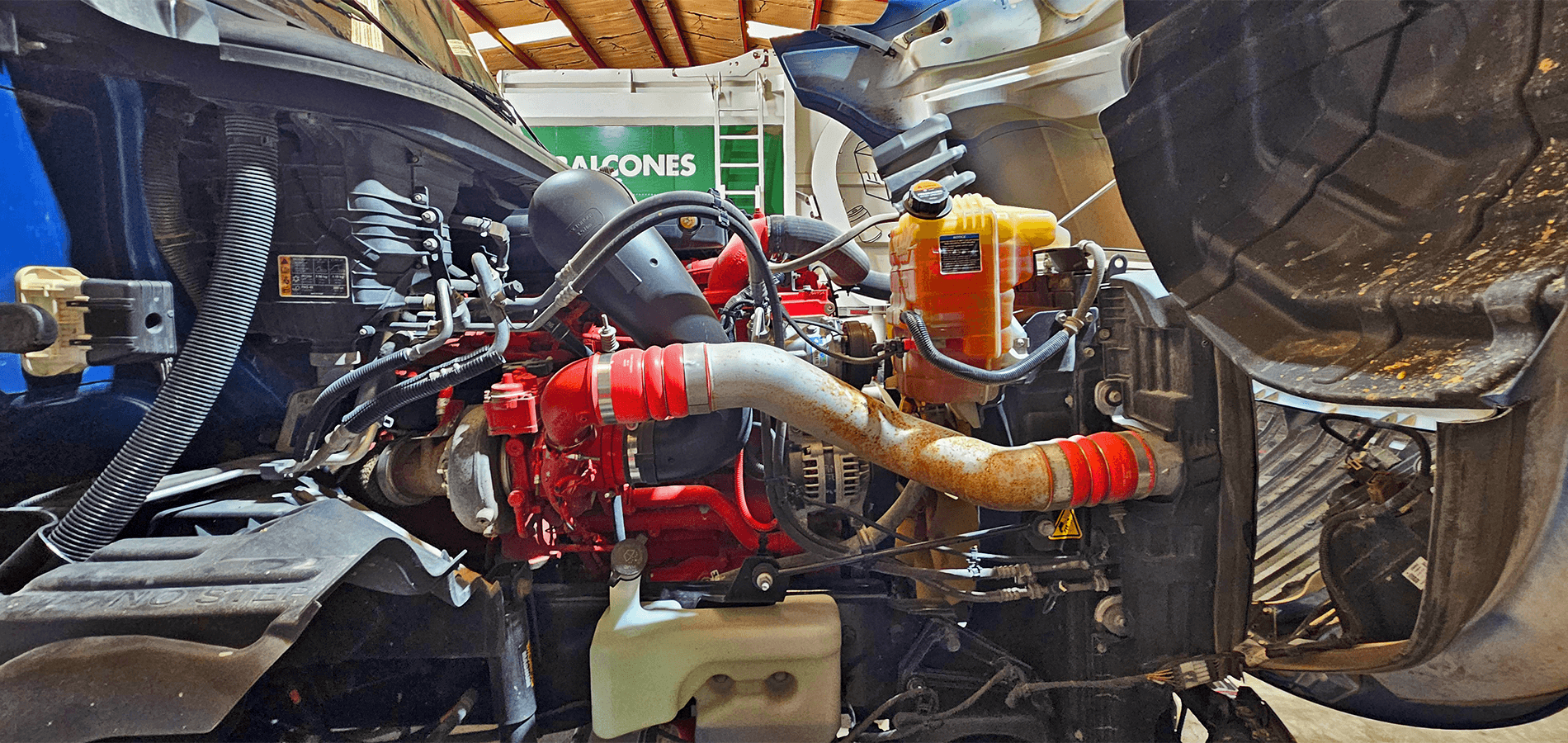
Coolant Reservoir Overflowing? Your Truck Is Telling You
Where the Pressure Is Coming From
Coolant pushing out of the surge tank isn't a coolant problem — it's a pressure problem.
Something is putting more pressure into the cooling system than the cap is designed to hold,
and finding what is the difference between a $50 cap and a $15,000 engine repair.
Salazar Semi-Truck Repair Inc. — 2323 Chalk Hill Rd, Dallas, TX 75212
Mobile dispatch · Shop Mon–Fri 7:00 AM–5:00 PM
First: Don't Open a Hot Reservoir
Heavy-duty cooling systems run pressurized at roughly 10–15 PSI, which raises the boiling point of the coolant well above 212°F. Opening the cap while the system is hot can release coolant that flashes instantly to steam. Let the engine cool completely before checking anything — and don't just keep topping off and driving. Whatever is pushing coolant out will keep doing it.
What Makes a Semi-Truck Coolant Reservoir Overflow
An overflowing reservoir means one of two things: the system is making too much pressure, or the cap is releasing pressure too early. These are the causes we actually find on Class 7 and Class 8 trucks, from most benign to most serious:
| Cause | What's happening | Typical fix |
|---|---|---|
| Failed pressure cap | A weak cap spring vents coolant below normal operating pressure — the system never holds what it should. | ✅ Cap test and replacement — often roadside |
| Overfilled system | Coolant filled above the cold line has nowhere to expand when hot, so the excess vents out. | ✅ Set correct level — roadside |
| Overheating engine | A stuck thermostat, failing fan clutch or restricted radiator drives coolant temperature up until expansion forces coolant out. | Diagnosis required — roadside or shop |
| Air compressor head failure | The coolant-cooled compressor head cracks and pumps compressed air directly into the cooling system. | 🔧 Shop — compressor head or unit |
| EGR cooler failure | A leaking EGR cooler lets exhaust gas pressurize the coolant — often with coolant loss and white smoke. | 🔧 Shop — EGR cooler replacement |
| Injector cup / sleeve leak | On engines with coolant-jacketed injector cups, combustion gas leaks past the cup seal into the coolant. | 🔧 Shop — cup replacement |
| Head gasket or cracked head | Combustion gases at over 1,000 PSI enter the cooling system, aerating the coolant and forcing it out — even before the truck overheats. | 🔧 Shop — head gasket / cylinder head |
The pattern matters: constant bubbling in the reservoir with the engine running — especially under load — points to combustion gas or compressed air entering the system. Overflow only after long pulls in Texas heat points to an overheating or expansion problem.
Overflowing but Not Overheating? Take That Seriously
Drivers often ignore an overflowing reservoir because the temperature gauge reads normal. That's exactly the symptom combustion-gas leaks produce early on. A head gasket, injector cup or EGR cooler leak pressurizes the system long before it makes the truck overheat.
Caught at this stage, the repair is contained. Ignored, the aerated coolant stops transferring heat, hot spots form in the head, and a seal-level failure becomes a cracked head, hydrolocked cylinder or full overheating event on the highway.
How We Find the Real Source of the Pressure
Guessing on cooling systems is expensive. Replacing a head gasket a truck didn't need — or a radiator when the real problem was an EGR cooler — wastes thousands. Our diagnosis isolates the source before any parts are ordered:
- Pressure cap test. We verify the cap holds and releases at its rated pressure. It's the cheapest possible fix, so it gets ruled out first.
- Cooling system pressure test. The system is pressurized and monitored to reveal external leaks and pressure loss into cylinders or coolers.
- Combustion-gas test. A chemical block test or exhaust gas analyzer confirms whether combustion gases are present in the coolant — the definitive head gasket / injector cup / EGR cooler indicator.
- Air system crossover check. If the compressor is suspected, we isolate it to confirm whether compressed air is entering the coolant.
- ECM data review. Coolant temperature history, fan commands and active fault codes tell us whether the truck has been running hot and how long the condition has existed.
Once the source is confirmed, we quote the actual repair — from a pressure cap to head work — with warranty on parts and labor, at one facility, in one repair file.
Can You Keep Driving With It?
Short distances, maybe. Loaded across Texas, no. Every mile with an unresolved overflow condition drains coolant the system needs. When the level drops far enough, the ECM triggers engine protection derate or shutdown — usually on the shoulder, usually loaded, usually far from help.
If your truck is losing coolant now:
- Stop topping off and driving — you're feeding coolant into a failure.
- Watch the temperature gauge and pull over at the first climb above normal.
- Note when the overflow happens — idle, under load, after shutdown. That detail speeds up diagnosis.
- Call before it strands you. A scheduled cooling system diagnosis costs a fraction of an emergency road call plus a tow.
One Shop From Diagnosis to Repair
At Salazar Semi-Truck Repair Inc. in Dallas, the same team that tests your cooling system repairs it — pressure caps, thermostats, fan clutches, water pumps, radiators, EGR coolers, injector cups and head gaskets, on Freightliner, Peterbilt, Kenworth, Volvo, International and Mack. If the truck can't safely reach the shop, our Mobile units respond on I-20, I-30, I-35E and Loop 12 and test on-site.
For more than 30 years we've given owner-operators and fleets the honest version: if it's just a cap, we tell you it's just a cap.
Coolant Reservoir Overflow – Frequently Asked Questions
Why is my coolant reservoir overflowing but the truck is not overheating?
The two most common reasons are a failed pressure cap that releases coolant below normal system pressure, and combustion gases entering the cooling system through a head gasket, cracked cylinder head or injector cup. Combustion gases pressurize the system even at normal temperature, pushing coolant out of the reservoir. A combustion-gas test of the coolant identifies which one it is.
Can I just keep topping off the coolant and keep driving?
No. If combustion gases or air are being pumped into the cooling system, the coolant will keep escaping and the engine can overheat or trigger engine protection shutdown. Continuing to drive with an unresolved overflow condition can turn a pressure cap or EGR cooler repair into a head gasket or engine failure.
Is it safe to open the reservoir cap to check the coolant?
Never open the cap while the engine is hot or the system is pressurized. Heavy-duty cooling systems operate around 10–15 PSI and coolant above 200°F can flash to steam and cause severe burns. Let the engine cool completely before checking the level.
How do you find out what is pushing coolant out of the reservoir?
We pressure-test the cooling system and the cap, perform a combustion-gas (block) test on the coolant, inspect for exhaust gases from the EGR cooler and air from the air compressor, and read ECM temperature and fault code data. Testing identifies the actual source before any parts are replaced.
Can an overflowing coolant reservoir be repaired roadside?
Sometimes. A failed pressure cap, a loose clamp or a minor external leak can often be handled roadside. Head gasket, injector cup, EGR cooler and air compressor failures require shop equipment. Our mobile technicians test first and tell you honestly which one you have.
Find the Pressure Source Before It Finds Your Engine
An overflowing coolant reservoir is the cheapest warning your engine will ever give you. Whether it's a $50 pressure cap or the first sign of a head gasket leak, a pressure test and combustion-gas test give you the real answer in one visit — before it becomes a roadside shutdown with a loaded trailer.
Call Salazar Semi-Truck Repair Inc. at 214-761-9082 for cooling system diagnostics in Dallas, TX.
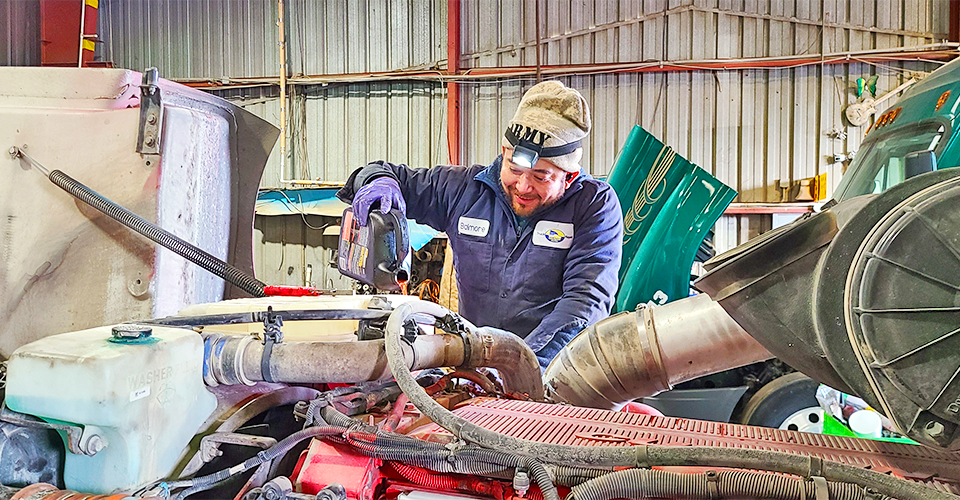
Cooling System Diagnostics & Repair in Dallas, TX
2323 Chalk Hill Rd, Dallas, TX 75212 — serving I-20, I-30, I-35E, Loop 12 and the entire Dallas–Fort Worth Metroplex.
📞 Call 214-761-9082 📍 Get DirectionsMobile dispatch · Shop Mon–Fri 7:00 AM–5:00 PM · EFS, credit card, cash and check accepted
Related Cooling System & Emergency Pages
- Semi-Truck Overheating While Driving — when the temperature gauge is already climbing.
- Coolant in the Oil — milky oil and internal coolant leaks.
- Diesel Fuel in the Coolant — injector cup and fuel system crossover failures.
- Semi-Truck Blowing White Smoke — coolant burning in the cylinders.
- Mobile Truck Repair in Dallas — when the truck can't reach the shop.
- Cooling System Repair Services — full cooling system capability list.