
If your semi-truck dash is showing "Engine Protection Shutdown in 10 Seconds", the ECM (engine control module) has detected an operating condition critical enough that it's preparing to kill the engine to prevent damage. This is not a code reader fault. This is not a glitch. This is the final stage of the engine's built-in protection chain — and once the countdown hits zero, the engine shuts itself down automatically regardless of where you are or what you're hauling.
The ECM monitors a chain of parameters continuously: coolant temperature, coolant level, oil pressure, oil temperature, intake restriction, and cooling system pressure. When any of these crosses a damage threshold and stays there long enough, the protection chain activates. The 10-second countdown means earlier-stage warnings (red light, audible alert, derate) have already fired and were not acted on — or the condition deteriorated faster than the early-warning thresholds could catch.
The countdown is not arbitrary. It's calibrated to the time the engine can continue operating before bearings, head, pistons, or cooling components sustain permanent damage.
The 10-second countdown is the last stage. Here's the full sequence the ECM follows:
Caution light only. Parameter crossing the early threshold. No power loss yet.
Red light + audible alert. Condition persistent, deterioration confirmed.
ECM begins reducing power, limiting torque to slow further damage.
Final warning stage. Some engines display 60s, 30s or jump straight to 10s.
You are here. Shutdown imminent. Pull over now.
ECM kills the engine. Game over until diagnosed and reset.
If you skipped stages 1-4 and are at Stage 5 now, that means the underlying condition is severe. Don't try to "make it home." Pull over and call.
📞 Call 214-761-9082 — Right NowEngine Protection Shutdown is the warning. The underlying cause is what we diagnose. Click any cause below to read the specific diagnostic guide for your situation.
Most common cause. Hose failure, water pump weep, radiator damage, heater core leak — coolant level drops below the low-level sensor threshold, ECM detects insufficient cooling capacity and initiates protection. You may see coolant on the ground or smell sweet exhaust.
Read: Coolant Leak Diagnostic Guide →Temperature climbing past the high-temp threshold — radiator restriction (bug screen, dirt, scale), thermostat stuck closed, water pump cavitating, air pocket in the system, or fan not engaging. The temp gauge will usually be pegged or very close to it.
Read: Overheating Diagnostic Guide →Oil pressure dropping below the safe operating threshold — worn main or rod bearings, oil pump failure, blocked oil pickup, blown oil filter gasket, or extreme oil dilution. This is the most damage-prone trigger because the engine is already running on insufficient lubrication. Pull over immediately.
Read: Engine Repair Service →Radiator cap failure, hose collapse, or a leak large enough to prevent the system from holding pressure. Coolant boils at lower temperatures without pressure, leading to vapor lock and rapid temperature climb. The ECM detects abnormal pressure-temperature curves and triggers protection.
Read: Cooling System Service →The cooling fan should engage automatically when coolant temperature climbs. If the clutch fails to engage, airflow through the radiator drops sharply at low road speeds (idle, traffic, hills), and temperature climbs until protection activates. Common on trucks with 500,000+ miles or after sticky-clutch viscous coupler failures.
Read: Cooling System Service →Coolant disappearing without visible external leak — head gasket breach, cracked head, failed EGR cooler, or oil cooler internal failure. Coolant migrates into the oil, into the cylinders (burned and exhausted as white smoke), or into the exhaust system. Engine protection activates because the loss is accelerating and silent.
Read: Coolant in Oil Diagnostic →Same process whether the truck arrived on its own or by tow. The goal is identifying the actual cause before any repair is authorized.
Cummins Insite, Detroit DiagnosticLink, PACCAR Davie4, or NoRegon — full ECM code pull with timestamps.
Coolant temp, coolant level, oil pressure, oil temp, fan engagement, intake restriction at idle and under load.
15-PSI pressure hold to identify external leaks and cap function. Combustion gas test if internal leak suspected.
Water pump output, thermostat opening, fan clutch engagement, radiator flow — each tested in sequence.
Mechanical gauge vs ECM reading, comparison at idle, mid-RPM, and load. Sample for analysis if bearing wear suspected.
Cap, hoses, radiator, water pump, heater core, EGR cooler — visible failures noted, internal failures pressure-isolated.
Root cause identified, scope of repair documented, written estimate before any chargeable work begins.
Cause repaired, codes reset, road test verification that protection thresholds are clear under load.
Each OEM engine has slightly different protection thresholds and countdown behavior. We follow each engine's factory protection logic.
Most common in our shop. ECM protection chain triggered by SPN 110 (coolant temp), SPN 111 (coolant level), SPN 100 (oil pressure). Countdown commonly displays at 30s and 10s. Cummins Insite required for full fault history and protection event log review.
Detroit protection chain uses a "Stop Engine" message with audible alert before the countdown. DD15 known for sensitive coolant-level-sensor faults that trigger protection when level is actually adequate — sensor verification is part of every diagnosis.
Volvo includes additional protection triggers tied to driveline torque and turbo boost. Protection countdown often paired with derate. Volvo D13 known for water pump shaft seal failures triggering coolant loss protection.
Pull over, call, diagnose
Typical cost:
Truck back on the road same-day to 2 days.
Push past the countdown
Typical cost:
Truck out of service 2-6 weeks.
The math is brutal. The 10-second countdown isn't a suggestion — it's the ECM's last opportunity to save you from a five-figure repair bill.
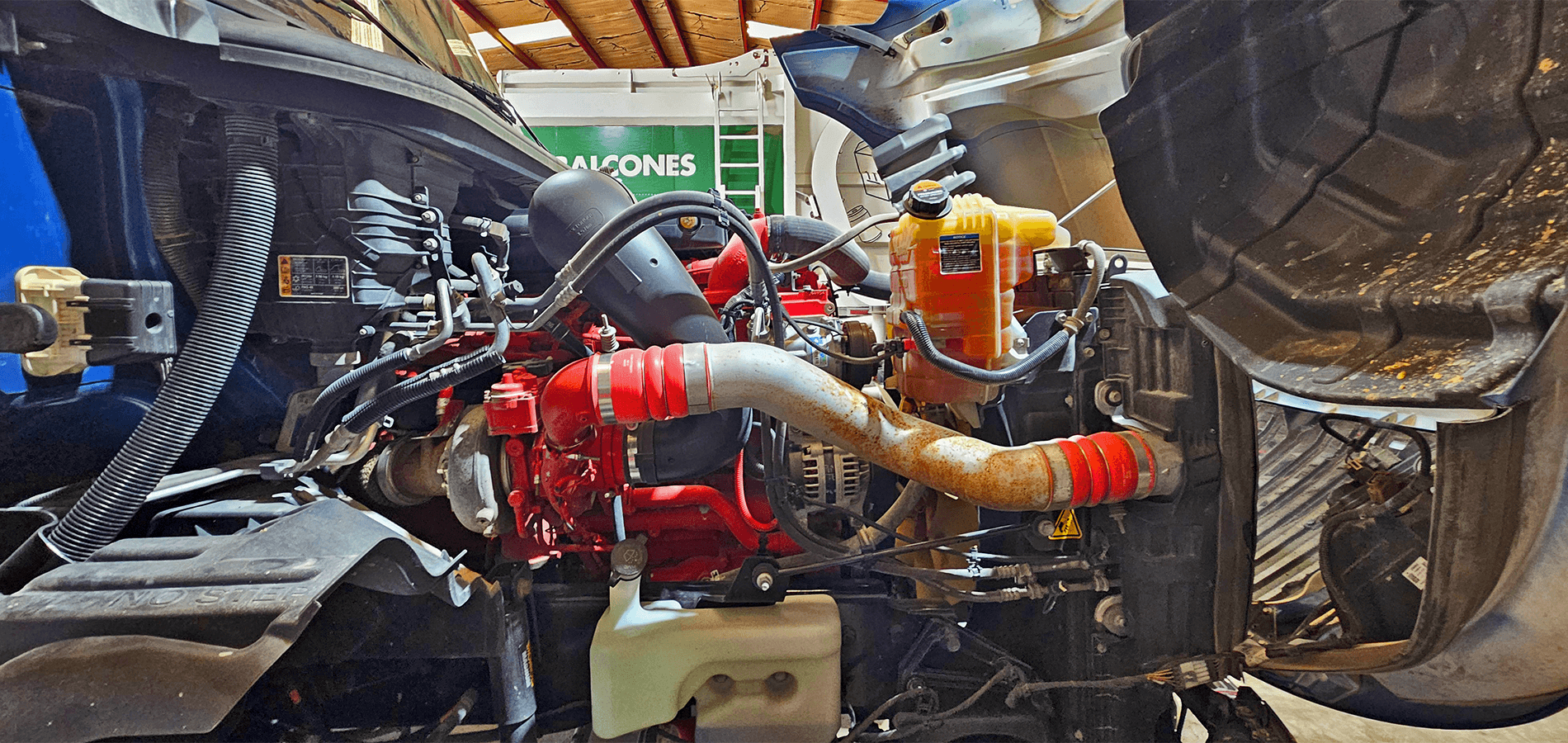
The Engine Protection Shutdown warning means the ECM has detected a critical operating condition outside safe parameters and is preparing to shut down the engine to prevent catastrophic damage. The 10-second countdown is the final stage of the protection chain — earlier warnings (red light, audible alert, derate) have already triggered. Once the countdown reaches zero, the engine kills itself automatically. Common triggers are low coolant level, high coolant temperature, low oil pressure, high oil temperature, and cooling system pressure loss.
No — these are two completely different ECM protection systems. The 5 MPH derate is an aftertreatment system inducement (DEF, DPF, SCR, NOx sensor faults) — it's regulatory, designed to force emissions compliance. The Engine Protection Shutdown is mechanical protection triggered by engine-damaging conditions (coolant loss, overheating, oil pressure drop). The aftertreatment derate caps your speed but lets you keep driving; the engine protection shutdown kills the engine in seconds because continuing causes physical engine damage. Read about the 5 MPH aftertreatment derate here.
Sometimes temporarily — but it doesn't fix the underlying problem. If coolant is low because of a leak, you'll be back in the same situation within hours. If coolant is low because of internal failure (head gasket, EGR cooler), adding coolant masks the symptom while engine damage continues. The warning came on for a reason. Get diagnostic scanning to identify the actual root cause before you turn the key again.
No. Pull over safely as soon as possible — next exit on I-20, I-30, I-35, or onto the shoulder if no exit is available. Continuing to drive with the countdown active means the ECM will shut the engine down on its own timeline regardless of where you are. A controlled stop in a safe location is always better than a forced shutdown in traffic. Once stopped, do not restart the engine — call for diagnostic intake. Restarting may reset the countdown but does not fix the cause.
Not necessarily — the protection system exists specifically to shut the engine down BEFORE damage occurs. If you respond to the warning immediately and avoid forcing continued operation, the engine usually escapes with no permanent harm. Damage occurs when drivers ignore the earlier-stage warnings and keep pushing until the 10-second final countdown — or worse, when they restart and try to run with the underlying fault still active. Diagnostic scanning will reveal whether protection activated in time or whether bearings, head, or cooling components were already compromised.
We pull the active and historic SPN/FMI fault codes using dealer-level diagnostic tools — Cummins Insite for ISX/X15, Detroit DiagnosticLink for DD13/DD15/DD16, PACCAR Davie4 for MX-13, plus NoRegon for full chassis. Live data review covers coolant temperature, oil pressure, oil temperature, coolant level sensor, fan engagement and intake restriction. From there we pressure-test the cooling system, inspect for visible coolant or oil leaks, check fan clutch operation, verify water pump output, and test oil pressure under load. The actual cause is identified before any repair authorization.
By frequency in our Dallas shop: low coolant level from external leaks (hoses, water pump, radiator) is the most common, followed by engine overheating from radiator restriction, fan clutch failure or air pocket. Lower-frequency but more serious causes include internal coolant loss (head gasket, EGR cooler, oil cooler), low oil pressure from worn bearings, blown oil filter, or oil pump issues, and cooling system pressure loss from cap failure or hose collapse. Each cause has a different diagnostic path — that's why proper scanning matters before parts get thrown at the problem.
You can clear active codes with a scan tool, but the ECM will set them again as soon as the underlying condition recurs — usually within seconds of restart. More importantly, clearing protection codes without fixing the cause makes you legally and financially responsible for any subsequent engine damage. Insurance and warranty claims become difficult to defend when fault history shows protection events that were cleared instead of repaired. The right move is diagnostic scanning, root cause identification, repair, and documented reset.
Once we identify your underlying cause, these specific guides cover the diagnostic path in depth.
External coolant leaks by color and component source. Most common Engine Protection trigger.
Read Guide →Temperature climbing under load on Dallas highways. Pre-protection diagnostic.
Read Guide →Milky dipstick — head gasket, oil cooler, EGR cooler internal failure.
Read Guide →Fuel-side breach. Injector cup, head crack. Cummins ISX/X15 pattern.
Read Guide →Coolant burning, fuel burning, or condensation. Decode by smell and timing.
Read Guide →Full cooling system diagnostics, water pump, radiator, fan clutch, thermostat.
Read Service →Engine Protection Shutdown warnings give you seconds not hours. Pull over.
Call. We diagnose same-day across DFW.
📍 2323 Chalk Hill Rd, Dallas, TX 75212 · Mon-Fri 7:00 AM – 5:00 PM
📞 Call Now 📍 Get Directions